
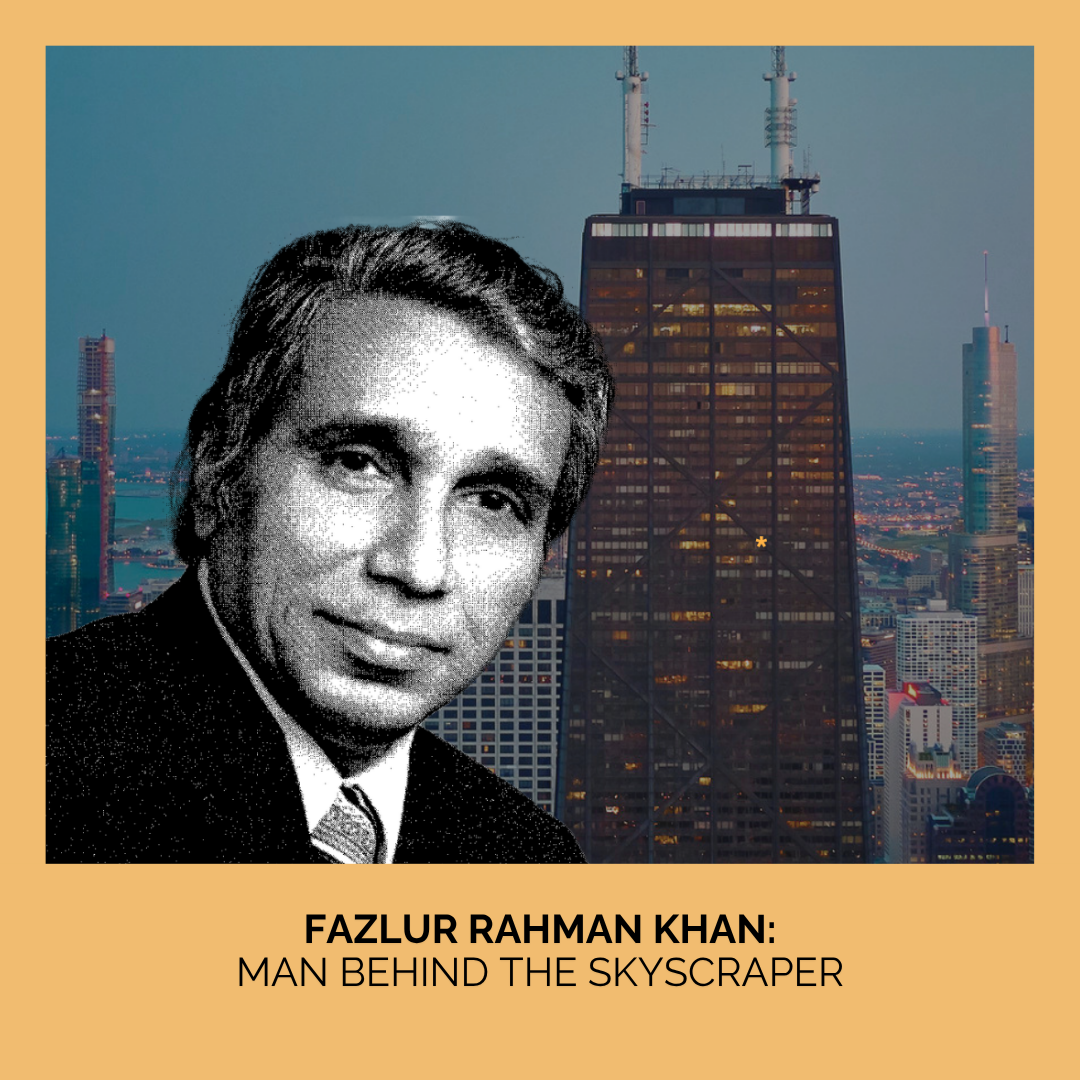
Presented as part of Illinois Humanities’ Community Conversations initiative commemorating the 250th anniversary of the Declaration of Independence, this three-part series explores how South Asian histories, innovation, food, and storytelling are deeply woven into the American narrative.
Celebrate the legacy of Fazlur Rahman Khan, the Bangladeshi American engineer whose groundbreaking designs transformed modern skylines, including Chicago’s John Hancock Center and Willis Tower. The program features a short film from filmmaker Laila Kazmi’s documentary on Khan, followed by a panel discussion and audience conversation exploring immigrant innovation and the South Asian impact on America’s story.
About Fazlur Rahman Khan
Fazlur Rahman Khan (1929–1982) was a Bangladeshi American structural engineer and architect widely regarded as one of the most influential figures in modern engineering. Often referred to as the “father of tubular design for high-rises,” Khan revolutionized skyscraper construction through innovative structural systems that made taller, lighter, and more efficient buildings possible. His pioneering work transformed urban architecture around the world and permanently shaped Chicago’s skyline through iconic structures such as the John Hancock Center and Willis Tower. Beyond engineering, Khan’s legacy continues to inspire conversations about immigrant innovation, global exchange, and the profound contributions of South Asian communities to American cultural and architectural history.